A wired gas detector is a critical safety device used for continuous monitoring of hazardous gases in industrial environments. Unlike portable units, a fixed wired gas detector is permanently installed and connected to a central control panel for real-time detection, alarm activation, and system integration. At The Transmitter Shop (TTS), we supply industrial wired gas detector solutions for demanding applications across oil & gas, chemical processing, manufacturing, and utilities. We are an authorized distributor of Otis Instruments, offering factory new, new surplus, and reconditioned equipment backed by technical support and product knowledge.
How a Wired Gas Detector Works
A wired gas detector continuously monitors the surrounding atmosphere using a sensor element specific to the target gas. Depending on the application, the sensor may use electrochemical, infrared (IR), catalytic bead, or semiconductor technology.
In a fixed wired gas detector setup:
- The sensor detects gas concentration.
- The transmitter converts the signal into a 4–20 mA output or digital communication.
- The control panel receives and processes the signal.
- Alarms and interlocks activate when thresholds are exceeded.
This continuous loop ensures real-time protection in facilities where gas leaks can cause fire, explosion, toxicity risks, or regulatory violations.
Types of Wired Gas Detectors Offered by TTS
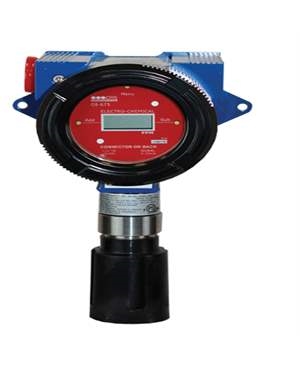
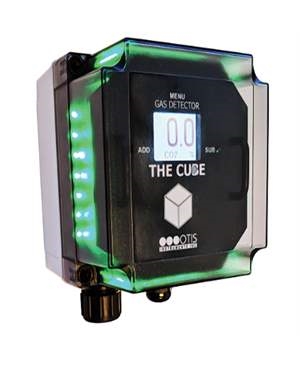
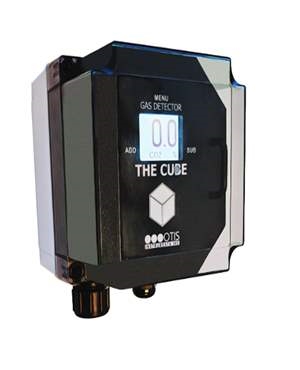
At TTS, we offer a comprehensive range of wired gas detector solutions from Otis Instruments, engineered for continuous industrial monitoring across toxic, combustible, and multi-gas environments. The following are the popular models we offer.
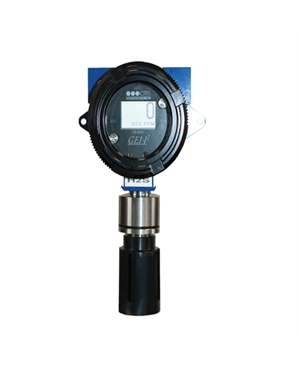
- Toxic Gas Detector: This fixed wired gas detector is designed for continuous detection of specific toxic gases such as hydrogen sulfide (H₂S), carbon monoxide (CO), sulfur dioxide (SO₂), and other industrial hazards. Using electrochemical sensing technology, it provides accurate low-ppm detection, stable 4–20 mA loop output, and non-intrusive calibration.
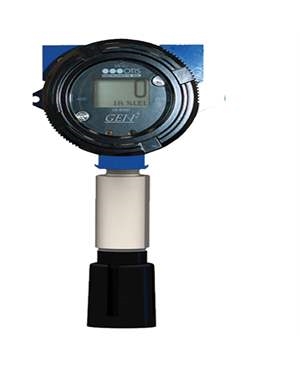
- Ambient Air Toxic Gas Detector: This model monitors toxic gases in open industrial environments and process areas. It supports electrochemical sensor options for precise low-level detection and features a graphical LCD display, Modbus communication capability, and local configuration interface.
- Ambient Air Hazardous Gas Detector: The model is built to detect regulated toxic gases in classified or heavy industrial areas. It supports multiple sensor technologies, including electrochemical and PID options, enabling detection of volatile organic compounds (VOCs) and hazardous vapors.
- Ambient Air Combustible Gas Detector: This model is purpose-built for continuous monitoring of flammable gases such as methane, propane, and other hydrocarbons. Using infrared sensing technology, it provides stable Lower Explosive Limit (LEL) detection without the sensor degradation common in catalytic bead sensors.
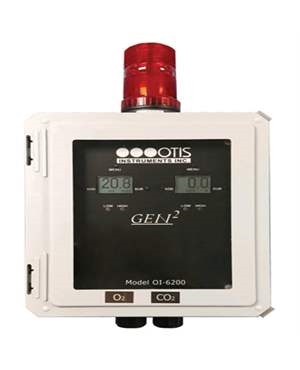
- Ambient Air Dual Gas Detector: This dual gas detector allows simultaneous monitoring of two different gases within a single enclosure. Each sensor operates independently with dedicated output signals and configurable alarm setpoints.
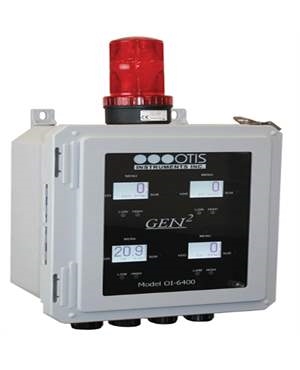
- Ambient Air Quad Gas Detector: The unit is designed for complex industrial environments requiring multi-hazard monitoring. It accommodates up to four sensor elements, supporting combinations of toxic, combustible, and oxygen detection. With centralized display, relay outputs, and wired communication capability, it provides comprehensive protection in large processing plants and high-risk industrial zones.
Key Features of Industrial Wired Gas Detectors
The following features of our fixed wired gas detector support reliable performance, simplified maintenance, and seamless integration into plant-wide safety systems.
- Graphical LCD with LED Backlight: Provides clear, real-time visibility of gas concentration levels, alarm conditions, fault diagnostics, and calibration status. The backlit display ensures readability in low-light or outdoor environments, allowing technicians to verify system status quickly during inspections.
- Red, Amber, Blue, or LED Tri-Light Strobe: Top-mounted, high-intensity strobe options deliver immediate visual indication of alarm states. Color differentiation helps distinguish between warning, high alarm, and fault conditions, improving situational awareness in noisy or high-traffic industrial areas.
- Dual Tone Buzzer: An integrated bottom-mounted audible alarm provides distinct sound patterns for different alarm levels. This ensures personnel are alerted even in environments where visual alarms may not be immediately visible.
- 3 Push-Button Interface (ADD, MENU, SUB): Enables local configuration, calibration, and diagnostics directly at the device. The interface allows operators to adjust parameters and perform maintenance tasks without removing the enclosure, reducing service time and exposure to hazardous areas.
- NEMA 4X Fiberglass Enclosure with Clear Window: The corrosion-resistant fiberglass housing protects internal electronics from moisture, dust, and harsh chemicals. The clear viewing window allows operators to monitor display information without opening the enclosure.
- Modular Sensor Design: Field-replaceable sensor assemblies simplify maintenance and reduce long-term ownership costs. Sensors can be serviced or replaced without replacing the entire fixed wired gas detector unit.
- One-Year Limited Hardware Warranty: Backed by manufacturer support, hardware components are covered under a one-year limited warranty. Sensor element warranty terms are subject to Otis verification and operating conditions.
Typical Industrial Applications
Our industrial wired gas detector finds immense applications in the following sectors.
- Chemical Processing & Petrochemical Facilities: Fixed wired gas detectors are installed in process units, pump stations, and storage tank farms to continuously monitor toxic process gases, flammable hydrocarbon vapors, and oxygen-deficient atmospheres, helping maintain regulatory compliance and operational safety.
- Oil & Gas Production Operations: Industrial wired gas detectors provide continuous monitoring at wellheads, separation systems, compressor stations, and remote production sites to detect hydrogen sulfide (H₂S) and combustible gas hazards.
- Wastewater Treatment Plants: Permanent detection systems are deployed in lift stations, digesters, enclosed basins, and collection networks to monitor methane, hydrogen sulfide, and oxygen-deficient conditions generated during biological treatment processes.
- Confined Space Entry Operations: Fixed wired gas detector systems support atmospheric testing in tanks, vessels, underground vaults, and enclosed chambers, ensuring safe entry conditions and continuous gas monitoring during maintenance activities.
- Manufacturing Facilities: Battery production plants, metal finishing units, food processing operations, and pharmaceutical facilities use industrial wired gas detectors to monitor process-related toxic and flammable gas risks in controlled production environments.
Tips for Selecting the Right Wired Gas Detector
The right choice of gas detector ensures accurate detection, regulatory compliance, and long-term reliability in industrial environments. Consider the following when selecting a model.
- Identify Target Gas and Detection Range: Clearly define which gases need to be monitored and at what concentration levels. Toxic gases typically require low-ppm detection accuracy, while combustible gases are monitored as a percentage of the Lower Explosive Limit (LEL). Confirm the sensor’s measurable range and response time.
- Assess Area Classification: Determine whether the installation location is classified as hazardous, such as Class I Division 1 or Division 2. The selected industrial wired gas detector must carry appropriate certifications for the area to ensure safe operation in explosive atmospheres.
- Evaluate Environmental Conditions: Consider ambient temperature, humidity levels, vibration exposure, dust, and potential corrosive elements. Outdoor or chemical-heavy environments may require NEMA 4X enclosures or additional protective measures to maintain long-term performance.
- Review Integration Requirements: Ensure the detector is compatible with your existing control architecture. Most fixed wired gas detector systems use 4–20 mA outputs, but some applications may require Modbus communication or relay outputs for alarm integration with PLC, DCS, or SCADA systems.
- Select Appropriate Sensor Technology: Choose sensor technology based on gas type and operating conditions. Electrochemical sensors are commonly used for toxic gases and oxygen monitoring. Infrared sensors are preferred for combustible gases due to stability and resistance to sensor poisoning.
- Consider Maintenance and Calibration Accessibility: Select models that allow non-intrusive calibration and local configuration. Easy access to calibration controls reduces service time and minimizes exposure in hazardous areas.
Contact our technical sales team for assistance in selecting appropriate detection equipment for your application requirements. We provide detector specifications, mounting recommendations, and integration guidance, ensuring the successful implementation of reliable gas monitoring systems that protect personnel and comply with industrial safety regulations.
Request a quote today or speak with our gas detection specialists about your monitoring requirements.
Frequently Asked Questions (FAQ's)
-
What is the maximum distance between a wired gas detector and a control panel?
The maximum distance depends on cable gauge, loop resistance, and power supply voltage rather than a fixed limit. Properly configured 4–20 mA loops can typically run several hundred to over a thousand feet, and much farther with appropriate wire sizing
-
Do wired gas detectors require a separate power supply?
Yes. Most fixed wired gas detector systems require a dedicated 24V DC power supply or panel-based power source to operate continuously.
-
Are wired gas detectors suitable for hazardous areas?
Yes. Many industrial wired gas detector models are rated for Class I Div 1 or Div 2 hazardous locations when properly installed.
-
What happens if the wiring connection fails?
Most systems are configured to generate a fault signal if communication is lost, allowing operators to identify wiring or power failures immediately.
-
How many wired gas detectors can be connected to one system?
The number depends on the control panel capacity. Modular systems can support multiple detectors across large facilities.