QUICK ENQUIRY
Accurate visualization of process data is essential for maintaining operational efficiency, process control, and equipment performance across industrial facilities. Digital Indicators provide clear, real-time display of process variables generated by transmitters, sensors, and control systems, allowing operators to monitor critical measurements directly at the point of use or from centralized control locations.
Industrial digital process indicators are widely used to display pressure, temperature, flow, level, and other process variables in manufacturing, utilities, chemical processing, water treatment, and automation systems. Whether installed as panel mount digital indicators within control panels or as field mounted digital indicators near process equipment, these devices improve process visibility and support informed operational decisions.
Filter By
Digital indicators are designed to convert incoming electrical signals into clear numerical displays that provide operators with immediate access to process information.
Commonly displayed process variables include:
By providing local and centralized visualization of process data, digital indicators support faster response to changing operating conditions and improve overall process control.
Digital indicators are available in multiple configurations to accommodate different installation requirements and monitoring objectives.
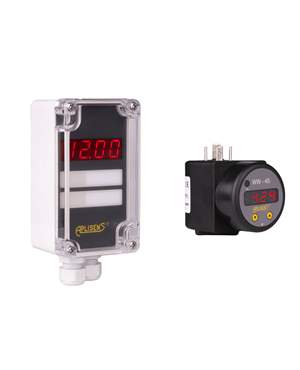
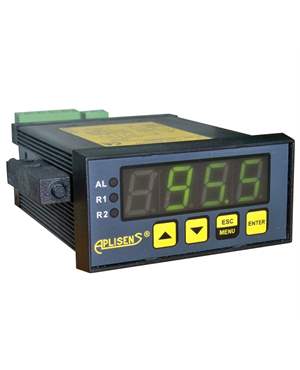
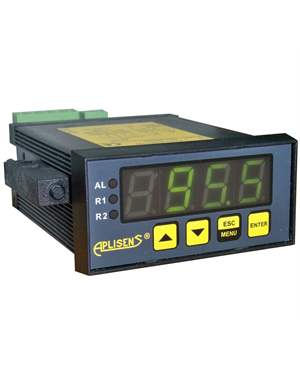
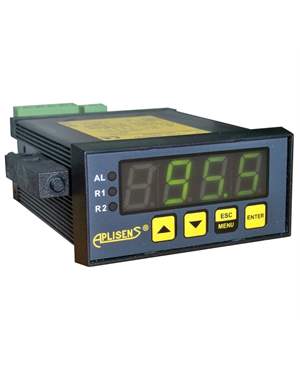
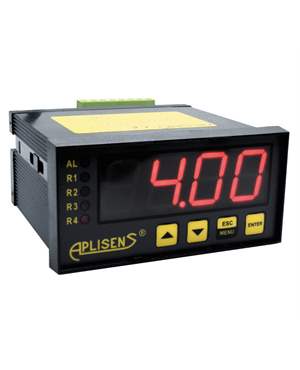
Panel mount digital indicators are installed within control panels, operator stations, and instrumentation cabinets.
Typical applications include:
These indicators provide centralized visibility of process values and are commonly integrated into larger control architectures.
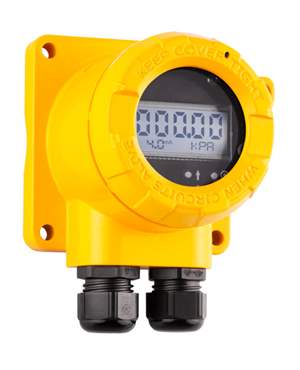
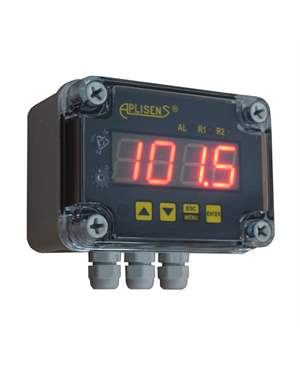
Field mounted digital indicators are installed directly on process equipment or near measurement points.
Common applications include:
Field indicators allow operators and maintenance personnel to verify measurements without returning to a control room.
Loop powered indicators operate directly from process signal loops and provide local indication without requiring an additional power source.
These indicators are commonly used in applications where simplicity, reliability, and reduced installation requirements are important.
Industrial digital indicators are designed to operate with a wide range of process instrumentation and signal types.
This flexibility allows digital indicators to be integrated into existing instrumentation systems without significant modifications.
Digital indicators are commonly used alongside:
They provide an additional layer of process visibility by displaying measurements directly where operators need them.
Digital indicators are widely used across industries where process values must be continuously monitored and displayed.
Chemical Processing :Supports monitoring of critical process variables throughout production, storage, and transfer operations.
Water and Wastewater Treatment : Provides local indication of flow, pressure, level, and treatment process parameters.
Manufacturing and Industrial Processing : Used to display operating conditions, equipment performance, and process measurements.
Oil and Gas Facilities : Supports process monitoring applications across storage, processing, and utility systems.
Power Generation : Provides real-time indication of process variables associated with boilers, turbines, and auxiliary systems.
Performance Features and Display Capabilities : Industrial digital indicators are designed for continuous operation in demanding process environments.
Choosing the appropriate digital indicator depends on process requirements, signal compatibility, and installation conditions.
Confirm compatibility with:
Evaluate:
Consider:
Determine whether the indicator will be used as a standalone display device or as part of a larger process monitoring system.
Proper selection ensures reliable performance and effective process visualization.
Digital indicators play an important role in industrial instrumentation by providing direct visibility of process variables without requiring access to centralized control systems.
By displaying measurements locally, operators can quickly verify operating conditions, identify process deviations, and support maintenance activities. Their compatibility with transmitters, sensors, and process control equipment makes them a valuable component of industrial monitoring systems.
Our range of industrial digital indicators supports process monitoring applications across manufacturing, utilities, water treatment, chemical processing, and industrial automation environments.
Available solutions include:
Technical support is available to assist with product selection, signal compatibility, and application requirements.
Yes. Many digital indicators are designed to accept standard industrial signals such as 4–20 mA and voltage inputs, allowing them to display process values without affecting the operation of the existing measurement loop.
Field mounted digital indicators are typically selected when operators require local visibility of process values near the measurement point. Panel mount indicators are generally used in control panels or centralized monitoring stations where multiple process variables are viewed from a single location.
Certain digital indicators are available with enclosure designs and certifications suitable for hazardous industrial environments. Selection should be based on area classification requirements, environmental conditions, and installation location.
Yes. Digital indicators can be configured to display pressure, temperature, flow, level, and other process measurements provided the input signal and scaling parameters are compatible with the connected instrument.
Digital indicators are typically configured using input range and scaling parameters that convert the incoming signal into engineering units such as PSI, bar, °C, °F, GPM, LPM, percentage, or level values.
Display size, digit height, brightness, mounting location, and viewing distance should be evaluated to ensure process values remain clearly visible to operators under normal operating conditions.
Digital indicators are commonly used alongside PLC, DCS, and SCADA systems to provide local process visualization while centralized systems handle monitoring, control, and data acquisition functions.