A Beginner’s Guide for Installation of Thermowell

Brian Craig

May 28, 2021

Thermowells play an important role in industrial processes. These are cylindrical tubes used to protect thermal equipment like temperature sensors from coming in direct contact with fluids. Since temperature is a crucial factor of industrial processes, the protection of temperature sensors ensures the durability of thermal equipment and desired temperature measurement. However, these devices are only helpful if installed properly. If you are unaware of its installation procedure, then this post is for you. This post offers detailed guidelines for the installation of one or multiple Thermowells in industrial systems and important considerations related to it.
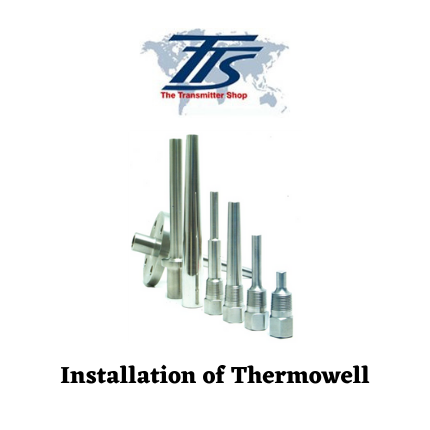

Guidelines to Install Thermowells

Thermowell installation is a calculated and meticulous procedure. It requires an appropriate selection of Thermowells, calculation of insertion depth/ immersion length, selection of mounting methods, and shield installation. Let us discuss all three steps in detail.

1. Calculation of Immersion Length: The Thermowells are installed inside fluid pipes or vessels in an industrial fluid processing system. It is important to immerse these devices to the appropriate depth in pipes or vessels so that the entire sensitive area of the temperature sensor can be protected. As, the temperature sensors are inserted inside these protecting devices, therefore insertion depth of sensors should be considered.

The immersion length can be calculated by using the following thumb rules.

  • The immersion length of Thermowell depends on the diameter of the pipe or vessels. According to the thumb rule, the Thermowell should be inserted into 1/3rd or 2/3rd depth of the fluid stream.
  • The insertion length of the temperature sensor should be lesser than 1-2" of the total length of Thermowell. This means the Thermowell should be 1-2" longer than the sensor probe but it should expose the temperature sensing area for measurement.

2. Choosing the Right Mounting Method: The Thermowells can be mounted in three different ways. Select one of the following mounting methods based on application requirements.

  • 90° to The Pipe: This type of mounting is suitable to mount multiple Thermowells in series. The devices are installed perpendicular to the pipe without letting its tip touch the far wall of the pipe.
  • 45° to The Pipe: This type of mounting is suitable for installing Thermowells in the circumferential area of the pipe. The angle between the two devices remains 45° to each other.
  • In the Elbow: Elbows are exposed to temperature and pressure fluctuations in a fluid transmission system. The temperature sensors are installed at these elbows using Thermowells. These devices can be installed facing upstream or downstream.

3. Installation of the Shield: The Thermowells must be protected with a shield to prevent false temperature measurement. Often the sensors measure fluctuations in temperature however from the wall to sensor the fluid temperature may differ which causes false temperature measurement. Therefore the shield is installed between the walls of the pipe to the sensors.

Important Considerations to Make During the Thermowell Installation

The following factors should be considered while making the Thermowell installation.

  • Perform installation based on the type of fluid, i.e.; liquid or gas.
  • Consider parameters other than temperature such as pressure, fluid speed, etc.
  • Measure the distance between the sensor and pipe fittings.

Key Considerations for Reliable Thermowell Installation

  • Fluid Type: Gas and liquid behave differently; adjust immersion accordingly.
  • Process Pressure & Flow: Higher pressure and flow increase vibration risk.
  • Wake Frequency Calculation: Prevent resonance in high-velocity flows.
  • Vibration Resistance: Tapered thermowells are more resistant to vibrations.
  • Sensor Fit: Use spring-loaded sensors or thermal compound to improve contact.
  • Accessibility: Choose a location that allows for sensor calibration and replacement.

Now that guidelines for the installation of Thermowells are discussed, the quality of devices must be verified. That is why you should source these devices from the trusted suppliers like The Transmitter Shop. The company offers high-quality Thermowells, temperature transmitters, etc. Since the inception, the company has offered high-quality devices, calibration, and repair services.

Engineering Impact of Improper Thermowell Installation

Thermowell installation has a direct influence on temperature accuracy, sensor response time, and mechanical reliability. When a thermowell is poorly positioned or incorrectly immersed, the temperature sensor may measure pipe wall temperature instead of actual process temperature. This leads to slow response, unstable readings, and inaccurate process control decisions.

From a mechanical standpoint, incorrect installation can expose the thermowell to excessive vibration and flow-induced stress, increasing the risk of fatigue damage. Even a well-designed thermowell can fail prematurely if installation conditions are not properly engineered.

Insertion Length and Its Effect on Temperature Accuracy

Insertion length is one of the most critical installation variables affecting temperature measurement performance. A thermowell that is not sufficiently immersed remains influenced by external heat transfer from the pipe wall rather than the process fluid itself.

Proper immersion allows efficient heat transfer between the process medium, thermowell, and sensor, resulting in faster response time and more accurate readings. This is especially important in gas and steam applications, where heat transfer is less efficient than in liquids.

Flow Velocity, Wake Frequency, and Vibration Risk

When fluid flows past a thermowell, alternating vortices form behind the stem, generating oscillating forces known as wake frequency. If these forces approach the natural frequency of the thermowell, resonance can occur.

During installation, factors such as insertion length, orientation to flow, and location within the piping system determine vibration exposure. Installing thermowells in high-velocity flow zones without accounting for vibration risk can significantly shorten service life and increase failure probability.


Thermowell Failure Modes Caused by Poor Installation

Most thermowell failures originate from installation-related issues rather than material defects.

Common failure modes include:

  • Stem fatigue caused by flow-induced vibration

  • Bending or breakage due to excessive insertion length

  • Leakage from improper mounting or sealing

  • Sensor damage caused by poor thermal contact

Real-World Thermowell Installation Mistakes in Industrial Plants

Field experience shows several recurring installation errors that impact thermowell performance.

Frequently observed mistakes:

  • Installing thermowells in stagnant or low-flow zones

  • Ignoring flow direction and turbulence effects

  • Over-tightening threaded thermowells

  • Allowing air gaps between sensor and thermowell

Correcting these issues at the installation stage improves measurement stability and extends equipment life.


When Thermowell Installation Should Be Re-Evaluated

Thermowell installation should not be considered permanent if process conditions change.

Re-evaluation is recommended when:

  • Flow velocity increases

  • Process temperature or pressure changes

  • Piping layout is modified

  • Vibration or unstable readings are observed

Reassessing installation under new operating conditions helps maintain accuracy and mechanical safety.

How Proper Thermowell Installation Ensures Measurement Reliability

Proper thermowell installation directly impacts:

  • Temperature accuracy

  • Sensor response time

  • Mechanical integrity

  • Long-term process stability

Treating thermowell installation as an engineered activity rather than a routine mechanical task ensures reliable temperature measurement and reduces operational risk.

Frequently Asked Questions (FAQ):

What are the different types of thermowells?

Thermowells come in several types, including threaded, flanged, weld-in, socket weld, and Van Stone designs. Each type is chosen based on process pressure, fluid type, and installation method.

What is a thermowell used for?

A thermowell protects temperature sensors from harsh conditions like high pressure, corrosive fluids, and flow-induced vibration. It also allows for sensor maintenance without opening the process.

What is RTD in thermowell?

An RTD (Resistance Temperature Detector) is a temperature sensor that can be inserted into a thermowell to measure temperature accurately while being shielded from process media.

What is a thermowell in piping?

A thermowell in piping refers to the installation of a thermowell directly into a pipe or pipe fitting to measure the process temperature inside the pipeline.

What is a flanged thermowell?

A flanged thermowell uses a bolted flange connection to attach to the pipe. It is widely used in high-pressure, corrosive environments for its secure and leak-proof fit.

How do I ensure accuracy in thermowell installations?

Ensure proper immersion, eliminate air gaps using heat transfer compounds, prevent vibration, and mount in an area with steady fluid flow.

Related Posts